






What Does the Rated Life of a Roller Bearing Mean?

# Industry News 2026-11-23 Views: 1301

Home > News > Industry News > What Does the Rated Life of a Roller Bearing Mean?

 In short, the basic rating life (L10) is the number of operating hours (or revolutions) that 90% of a batch of identical bearings, running under the same conditions, can achieve without fatigue spalling.

CTA Facebook X LinkedIn WhatsApp Email


Why "90%" Instead of "How Long It Lasts"?

Bearing failure is not like a light bulb burning out at a fixed time — it is fatigue spalling. Under repeated contact stress, micro-cracks form beneath the raceway surface and eventually cause material to flake off. This process is inherently random: identical bearings from the same batch, running under identical conditions, do not fail at the same time.

That is why the industry uses statistics:

  • L10 life: the life that 90% of bearings can achieve (10% may fail earlier) — the standard rating life
  • L50: the life 50% of bearings achieve (median life, about 5× L10)
  • L1: the life 99% of bearings achieve (for high-reliability applications, about 0.25× L10)

There is no single "expiration date" for a batch of bearings — only a life distribution curve. The rating life is a reliability index defined on that curve.


How Rating Life Is Calculated

The basic formula (ISO 281):

L10 = (C / P)^ε

  • C: basic dynamic load rating (the "Cr" value listed in bearing catalogs)
  • P: equivalent dynamic load (the actual working load converted)
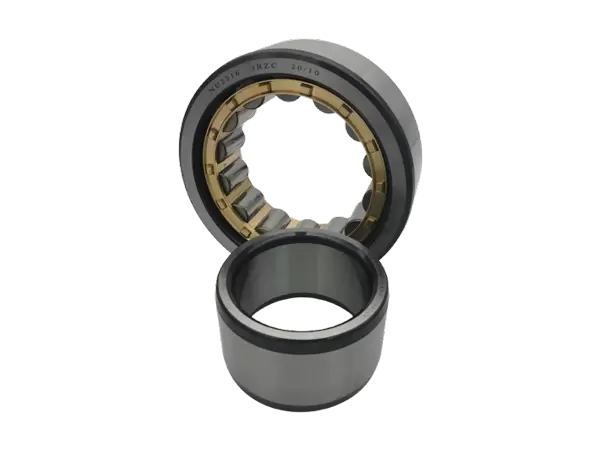
  • ε: life exponent — 10/3 (≈3.33) for roller bearings, 3 for ball bearings

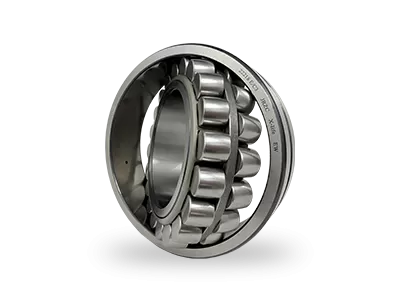
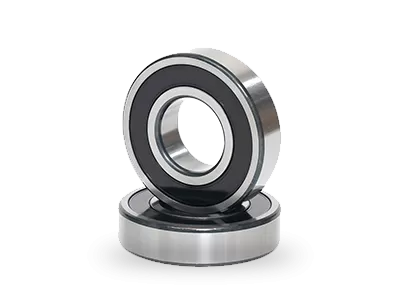
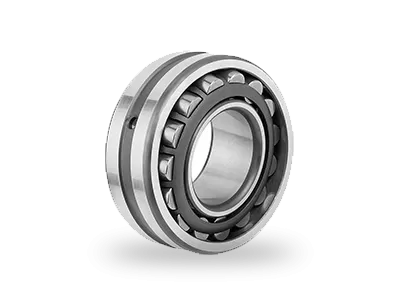
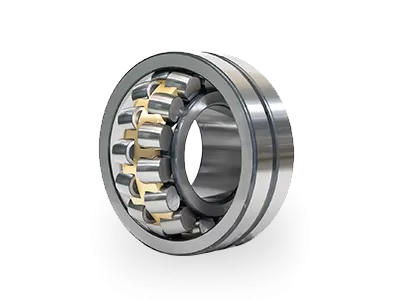
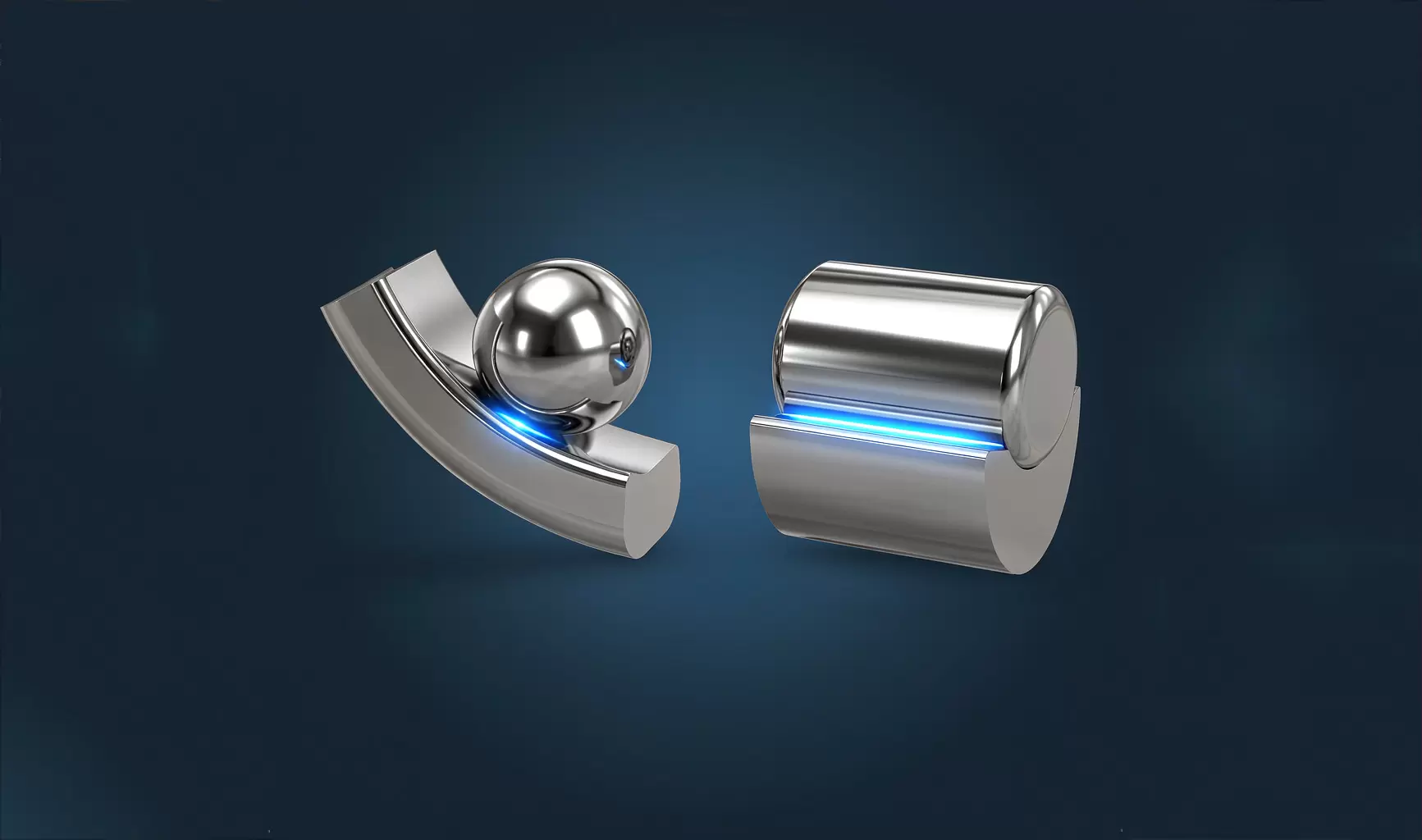
This exponent difference comes directly from contact geometry: roller bearings work in line contact, where the load-life relationship decays more gently. In other words, load increases "hurt" roller bearing life less. For example, doubling the load reduces a ball bearing's life to 1/8, but a roller bearing's only to about 1/10.
Converted to operating hours:

L10h = (C/P)^ε × 10⁶ / (60 × n) (n = speed in rpm)

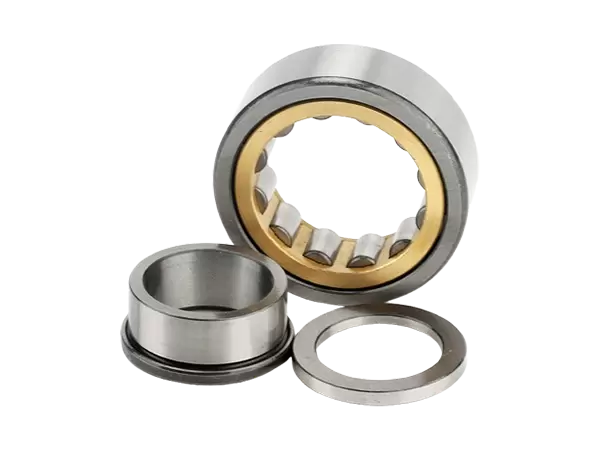
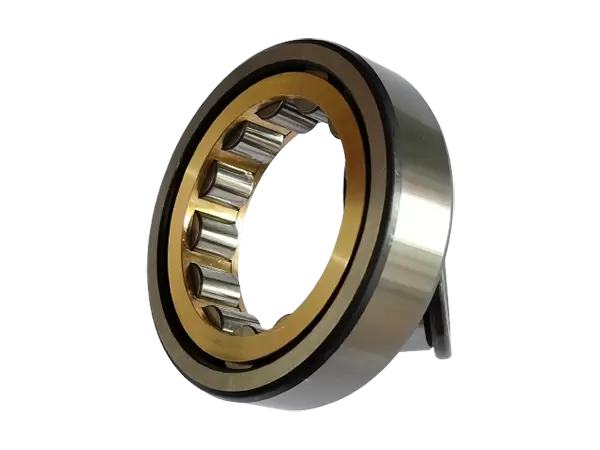
Example: a cylindrical roller bearing with C/P = 4 at 1500 rpm gives L10 ≈ 4^3.33 × 10⁶ / 90000 ≈ 1,900 hours in magnitude — in engineering practice, correction factors are usually applied to reach the target life.


 Rated Life ≠ Actual Life

This is a common misunderstanding among customers — and worth explaining proactively in sales:

  • Rating life is a reliability index, not a guaranteed life — it describes a statistical result for the batch
  • Actual life may be longer or shorter, depending on lubrication, contamination, mounting alignment, and temperature
  • This is why engineering practice uses the modified rating life (ISO 281 modified), which factors in lubrication condition, contamination level, and stress coefficients
  • Conversely, well-maintained bearings can far exceed L10, while poorly lubricated ones may not even reach half of it

What It Means for Selection

  • Given a target machine life (e.g., 20,000 hours required by an OEM) → work backwards to the required C/P ratio → select the bearing
  • Rule of thumb: general industrial equipment typically requires L10 ≥ 20,000–40,000 hours; long-life applications such as fans and motors require ≥ 100,000 hours

The rating life (L10) is "the operating time that 90% of a batch of bearings can achieve without fatigue spalling under the same conditions." It is not a warranty period for a single bearing, but a statistical reliability index for the whole batch — which is why identical bearings may last three years or ten.


Discover more