Needle Roller Bearings Explained: TA, HK, HF, NK, NA, RNA, AXK and KT Series

# Industry News 2026-11-11 Views: 1217

Home > News > Industry News > Needle Roller Bearings Explained: TA, HK, HF, NK, NA, RNA, AXK and KT Series

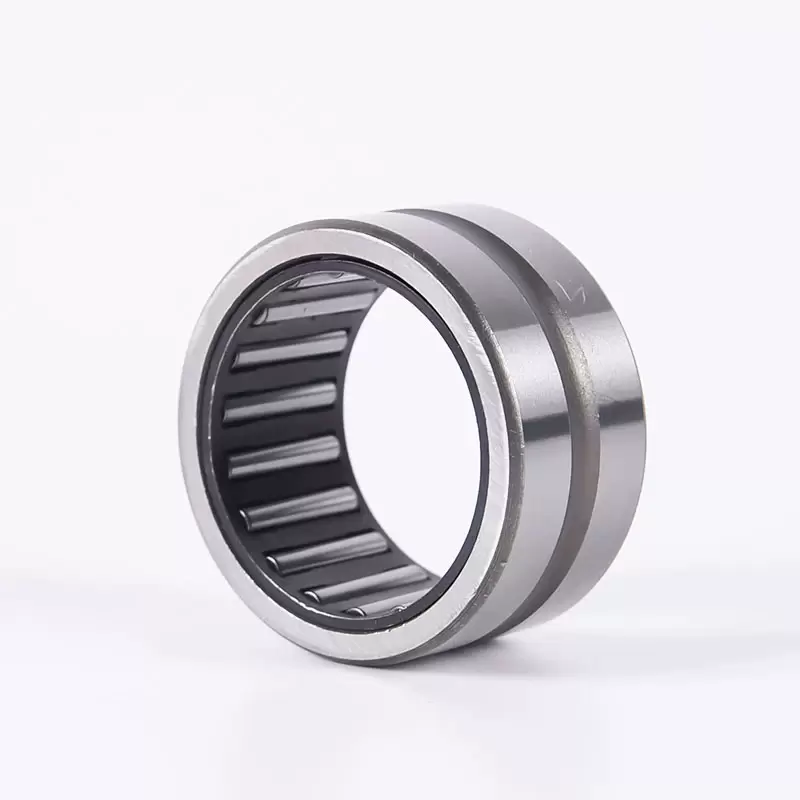
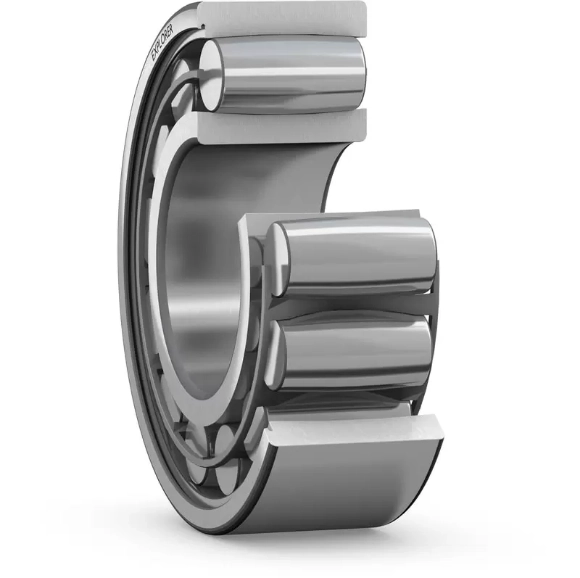
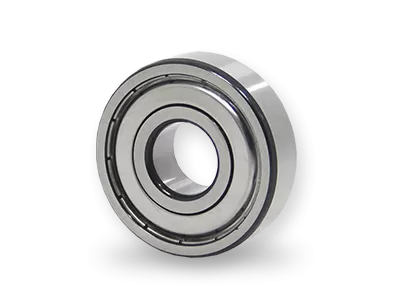
A needle roller bearing uses long, slender needle-shaped rollers to deliver high radial load capacity within a very small envelope. Compared with ball bearings, it has a smaller cross-section and lighter weight while offering higher load capacity — making it ideal for applications where radial space is limited. The thin outer ring is made of hardened, precision-ground steel, and the small roller radius means lower friction torque, which improves mechanical efficiency. Needle bearings are widely used for machinery miniaturization, weight reduction, and precision engineering.

CTA Facebook X LinkedIn WhatsApp Email


Overview of the Eight Series

SeriesKey Features & Applications
TADrawn-cup type; minimal cross-section; ideal for compact installations and low-cost, high-volume production
HKDrawn-cup type; reliable under high speed and heavy load; large grease capacity allows long lubrication-free operation
HFOne-way clutch type; rotates in one direction and blocks reverse motion; used in indexing and overrunning mechanisms
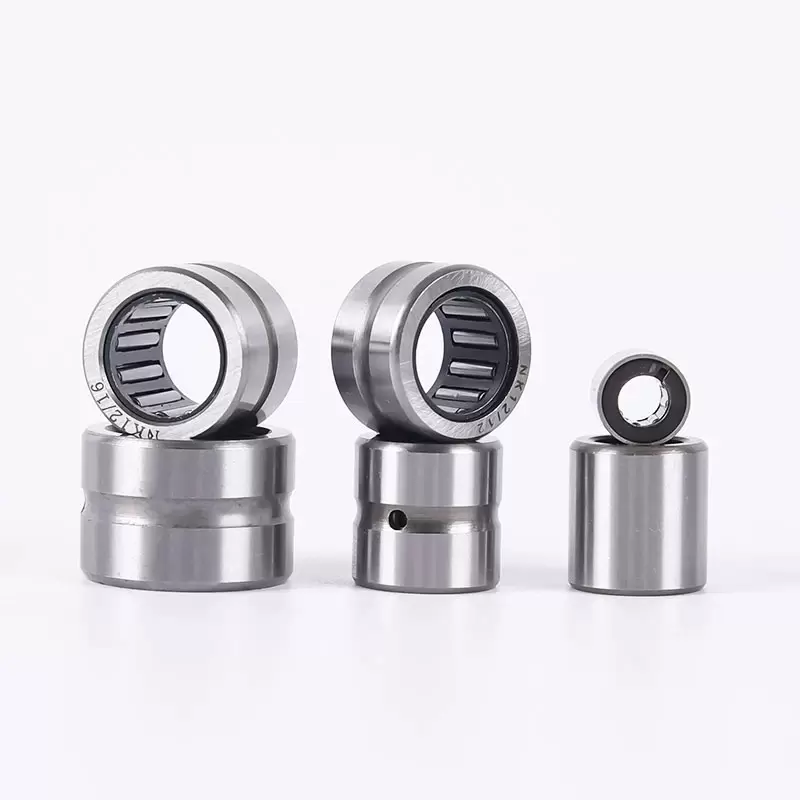
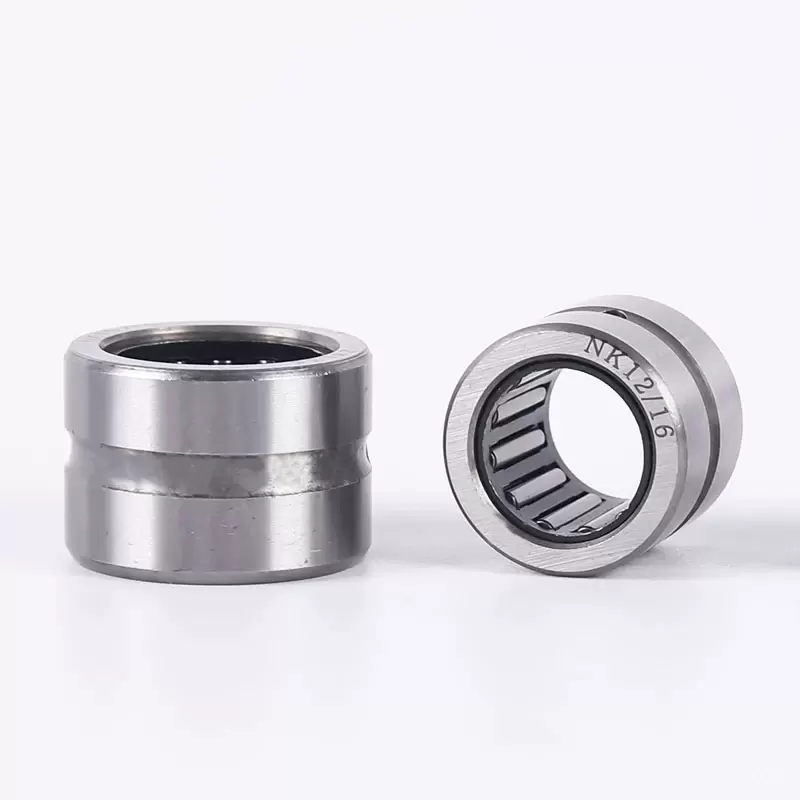
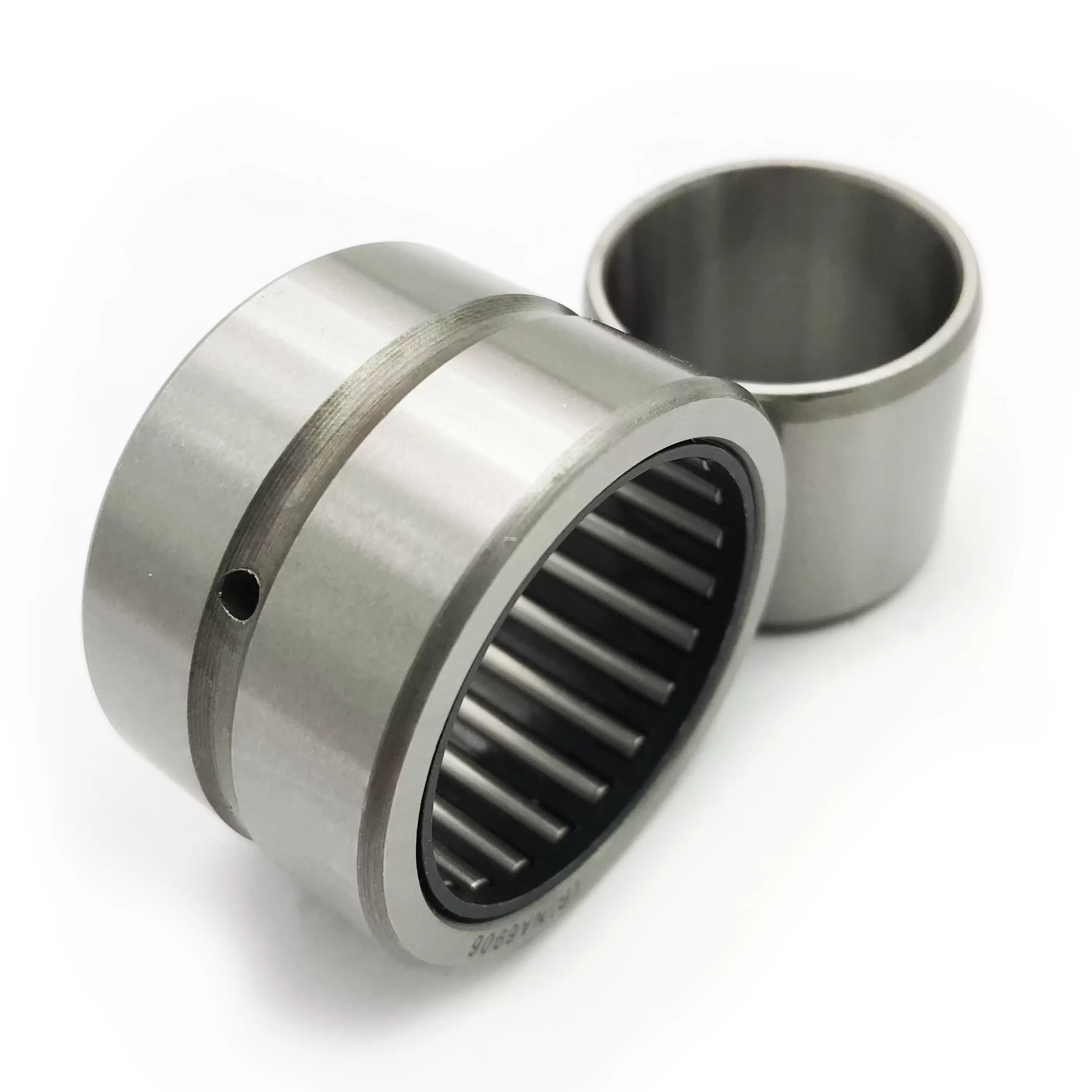
NKSolid type without inner ring; compact and lightweight with excellent high-speed performance; common in automotive crankshafts
NASolid type with inner ring; high rigidity and load capacity; suitable for light-alloy housings
RNASolid type without inner ring; uses the shaft as the raceway for an even more compact design; found in textile, printing, and packaging machinery
AXKThrust needle roller and cage assembly; supports axial loads with minimal axial space
KTCage and needle assembly; lightweight and high-speed; used in engines, compressors, and industrial pumps


Series Highlights

TA / HK (Drawn-cup type): Structurally similar, both consist of a thin pressed outer ring, a cage, and a set of needles. In the HK series, the needles require no axial fixing devices relative to the cage, remain undamaged under high speed and heavy load, and store a large amount of grease for long-term maintenance-free operation.

HF (One-way clutch type): A thin-wall alloy steel outer ring with a plastic cage; each needle is supported by an individual spring, providing high indexing frequency, precision, and low clutching torque. Typical applications include conveyor systems, indexing mechanisms, and packaging equipment.

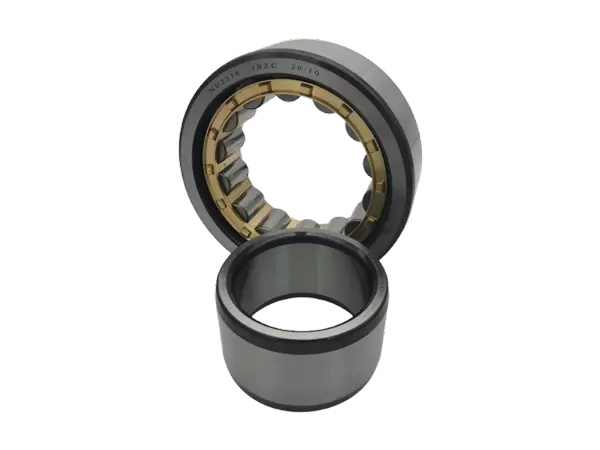
NK / RNA (Without inner ring): These use the shaft itself as the raceway, so the cross-section is smaller. The shaft must have sufficient hardness and grinding accuracy; if it does not, choose the NA series with an inner ring instead. NK is common in space- and weight-sensitive automotive parts such as crankshafts and cam followers, while RNA is widely used in textile machinery and printing presses. Both are available in metric and inch series, each with cage-type, full-complement, and sealed versions.

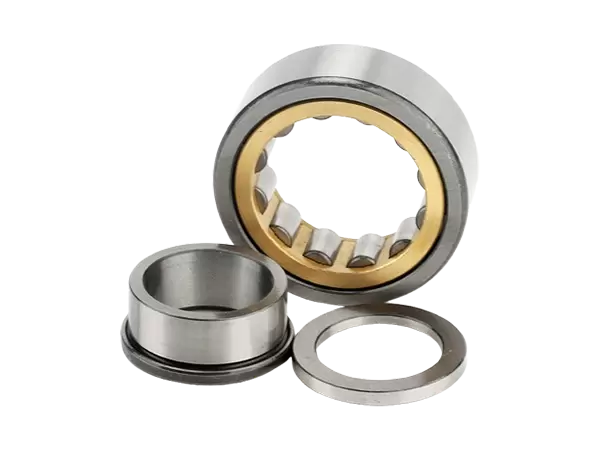
NA (With inner ring): The outer ring is hardened, so it performs reliably even in light-alloy housings. The inner ring can be replaced separately, easing maintenance — a good choice when the shaft is soft or lacks precision.

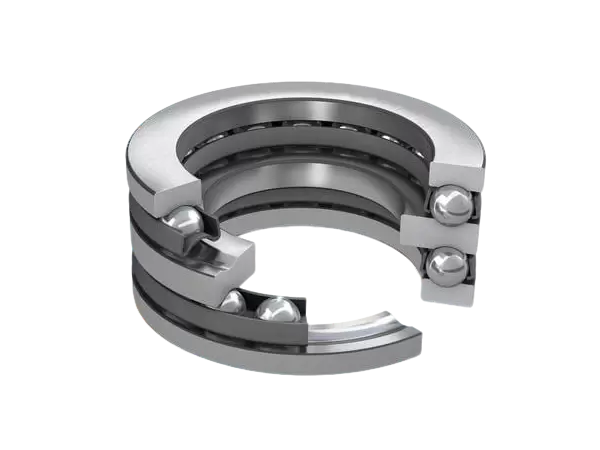
AXK (Thrust type): Consists of a washer (seat ring) and a needle roller cage assembly. Designed for high axial loads where high rigidity and minimal axial space are required, such as automotive gearboxes, agricultural machinery, and heavy industrial equipment.

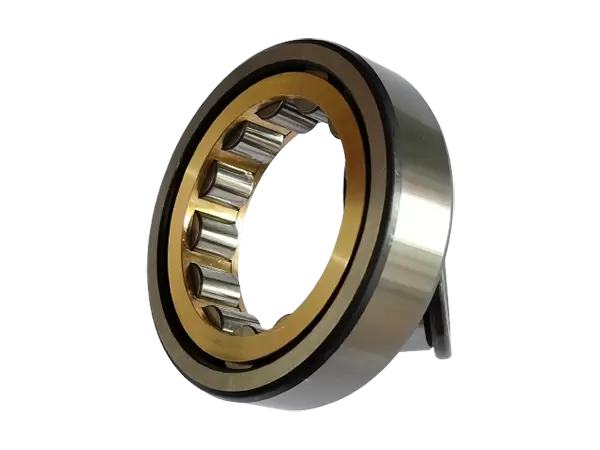
KT (Assembly type): An independent bearing unit mounted directly between the shaft and housing bore. The needles are precisely guided by the cage, combining high load capacity and rigidity with high-speed capability.




Difference from Ball Bearings & Selection Guide

  • Needle roller bearings: The first choice when radial space is limited and radial loads are high, but less suitable for extremely high speeds or heavy axial loads;
  • Ball bearings: Better for very high speeds or combined radial + axial loads;
  • When axial loads are present, pair a radial series (NK/NA/RNA/KT) with the thrust series AXK.

Three key selection factors: whether an inner ring is needed, available radial space, and load and speed conditions. Extremely tight space with the shaft usable as a raceway → NK/RNA; insufficient shaft hardness or precision → NA; compact, low-cost, high-volume production → TA/HK.

FAQ

  • Noise or rough running: Usually caused by press-fitting conditions, tolerance fits, lubricant choice, or insufficient hardness/roundness of the shaft raceway — not necessarily bearing damage;
  • Rust or short service life: Commonly due to inadequate lubrication, seals mismatched to the environment (high humidity, dust, coolant), or loads/speeds beyond the series design range;
  • For an inquiry, provide: The part number (e.g., HK2016) or bore/OD/width, application, load direction and magnitude, speed, operating environment, and quantity. Custom sizes, seals, and secondary machining are available on request.

Discover more