
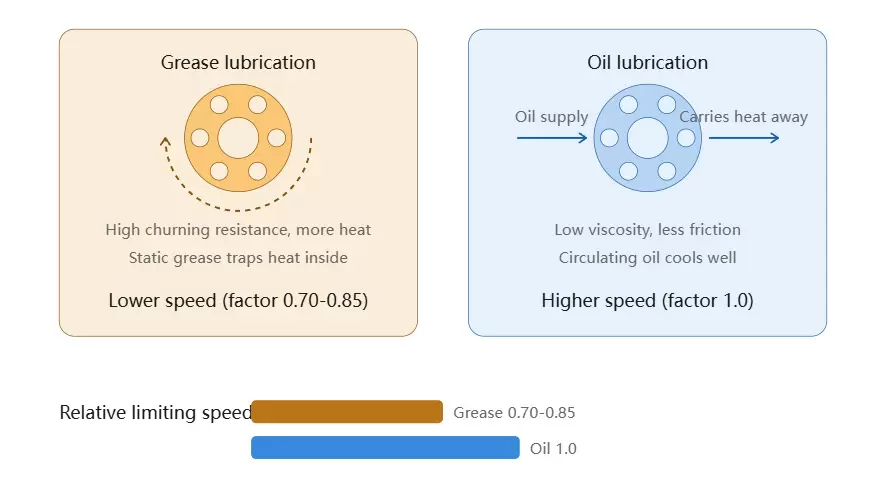
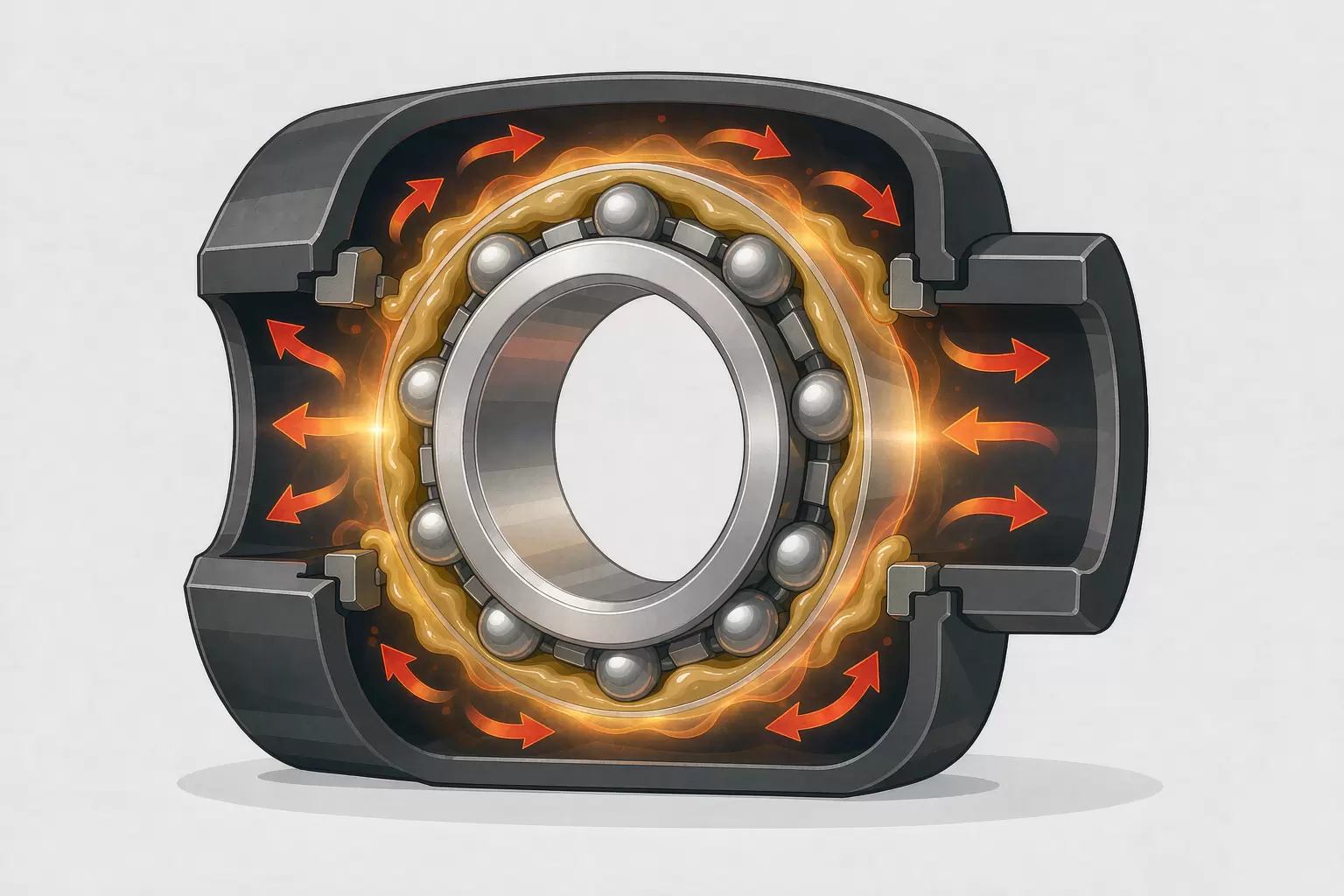
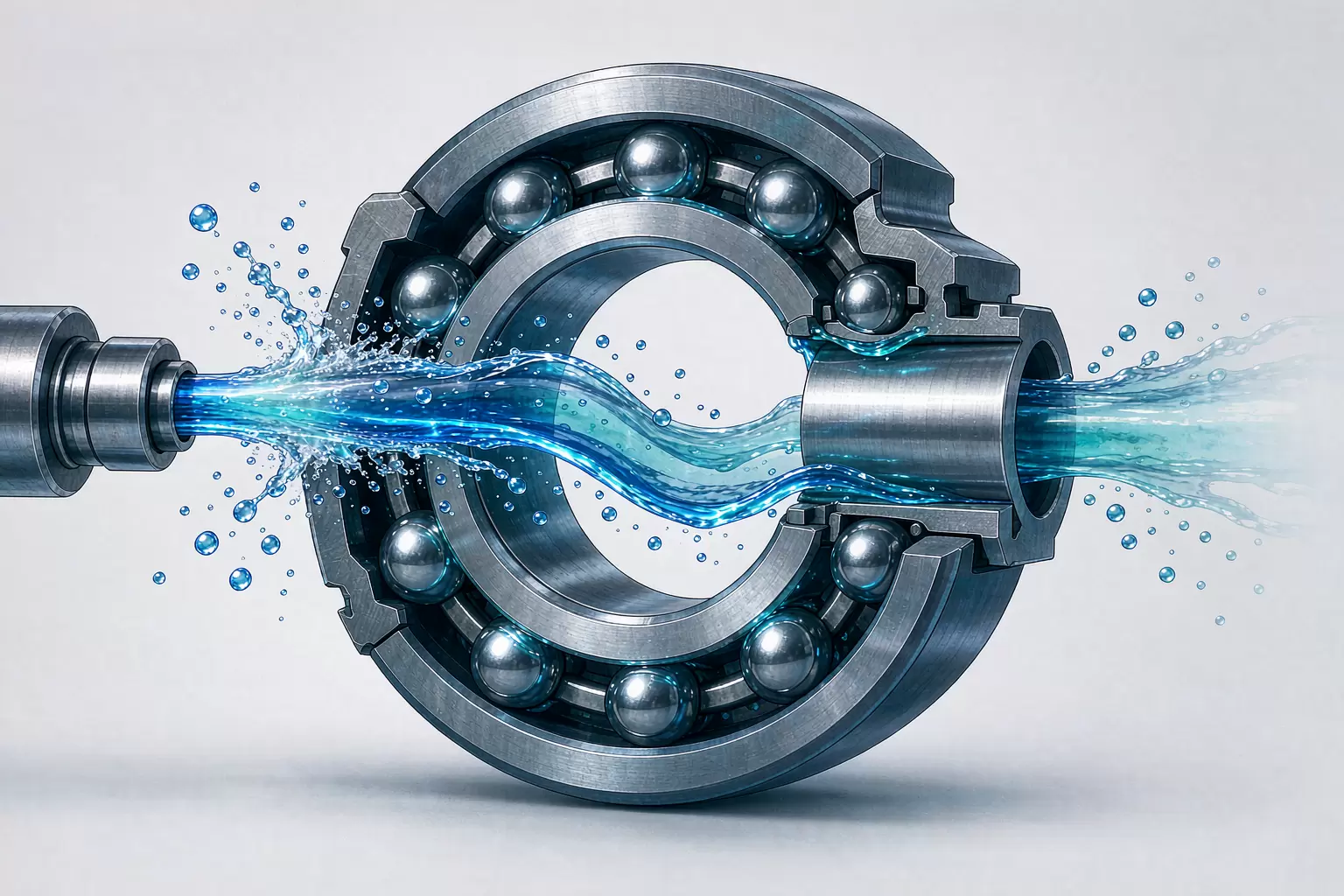
The limiting speed is the highest speed a bearing can operate at under normal lubrication and cooling conditions. This article uses diagrams to illustrate the differences in heat generation and heat dissipation between grease lubrication and oil lubrication, explaining why the limiting speed of grease lubrication is typically only 70% to 85% of that of oil lubrication.
The limiting speed (n) is a key rated value given in bearing catalogs/spec sheets: the maximum rotational speed at which a bearing can run continuously under specified conditions (typically load no more than 10% of the basic dynamic load rating, i.e. P ≤ 0.1C, with proper lubrication and cooling).
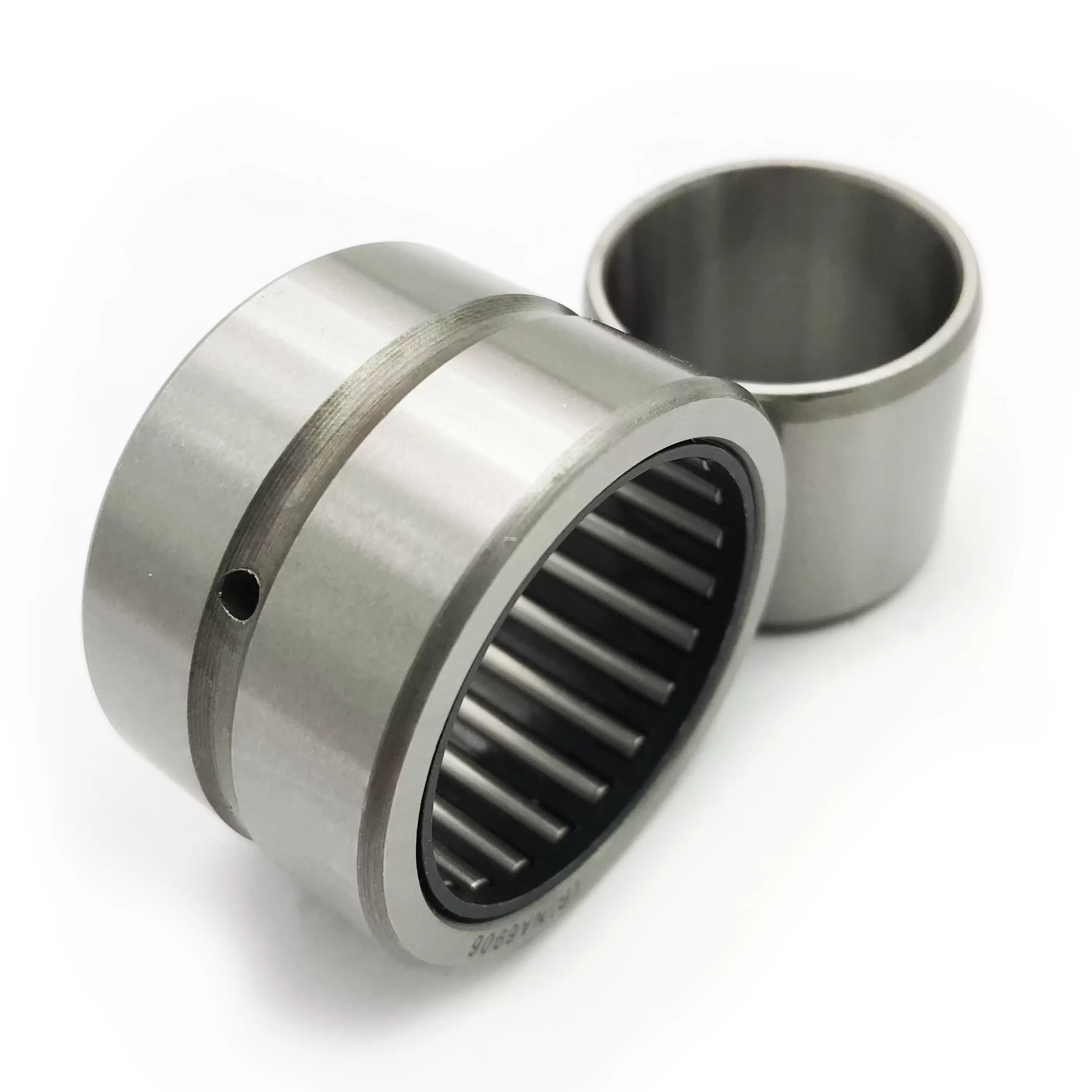
It is essentially a heat-balance boundary: friction inside the bearing generates heat while the housing dissipates it. The higher the speed, the faster heat is generated; once generation outpaces dissipation, temperature keeps rising, causing lubricant breakdown, accelerated wear, and cage damage — life drops sharply. So the catalog limiting speed is essentially the safe ceiling near the point where "heat generated = heat removed."


The difference comes down to two curves: friction heat generation vs heat dissipation capability (as shown in the diagram):
Grease lubrication (left)
Oil lubrication (right)
The limiting speed is determined by the balance between frictional heat generation and heat dissipation; grease generates more heat and dissipates poorly, while oil has lower friction and can carry heat away by circulation — so for the same bearing, the grease-lubricated limiting speed is typically well below the oil-lubricated one.
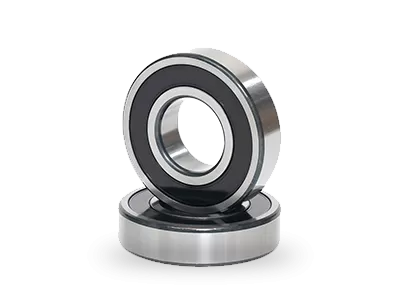
Practical tip for your bearing website: in product spec tables, the limiting speed is conventionally shown in two separate columns — "Grease" and "Oil" (e.g. deep groove ball bearing 6208: ~8,500 r/min with grease, ~10,000 r/min with oil) — that's the standard industry presentation.