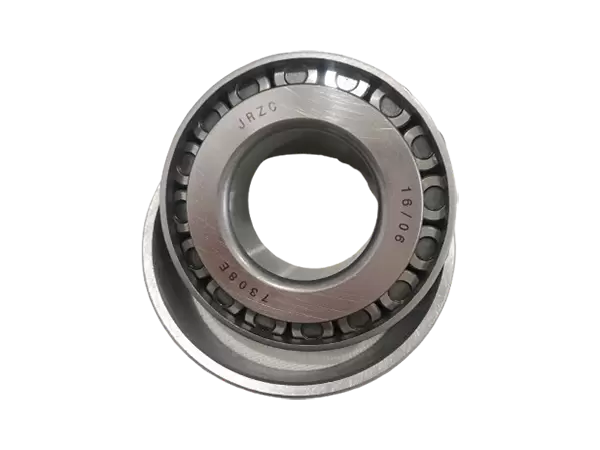
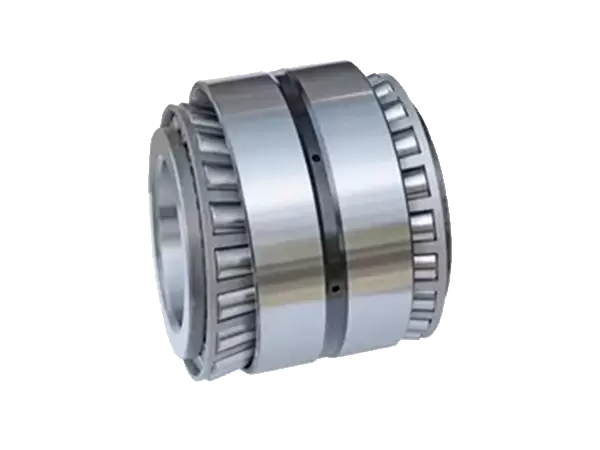
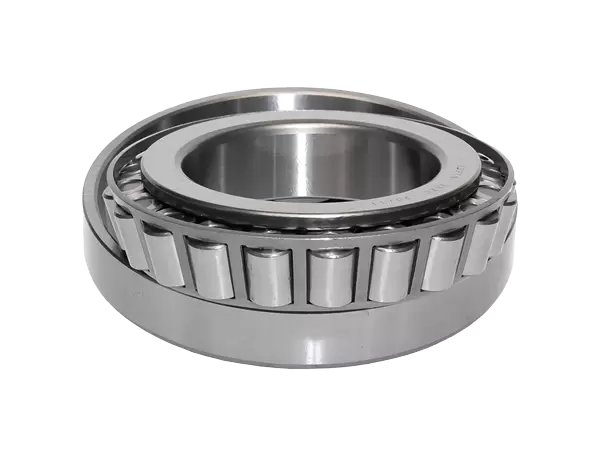
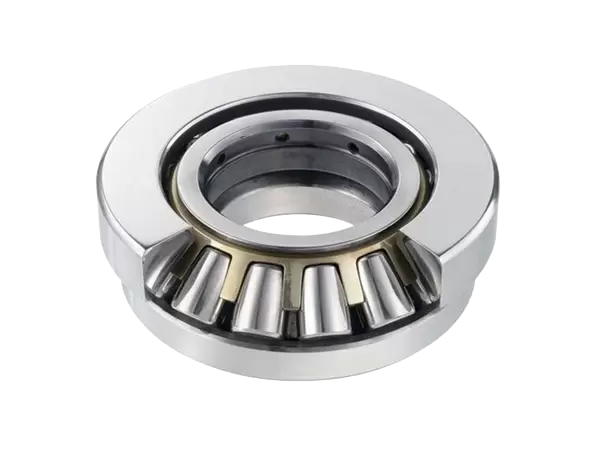
In the bearing family, the tapered roller bearing is a special case: it is practically the only type of rolling bearing that requires paired installation by design principle. Many equipment failures, when traced back to the root cause, turn out to stem from "installing only one" or "installing the pair incorrectly."
Why must tapered roller bearings be used in pairs? What happens if you use just one? And what is the difference between back-to-back and face-to-face configurations? This article explains it all in one place.
1. Structure First: Tapered Roller Bearings "Push but Never Pull" by Nature
To understand why pairs are mandatory, start with the force structure.
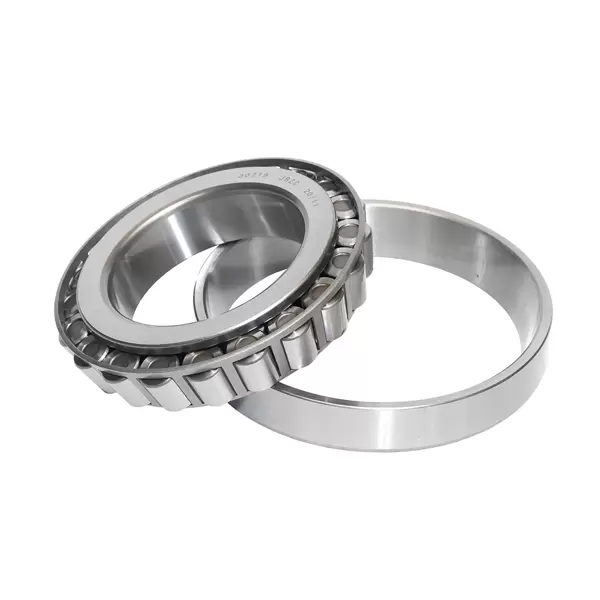
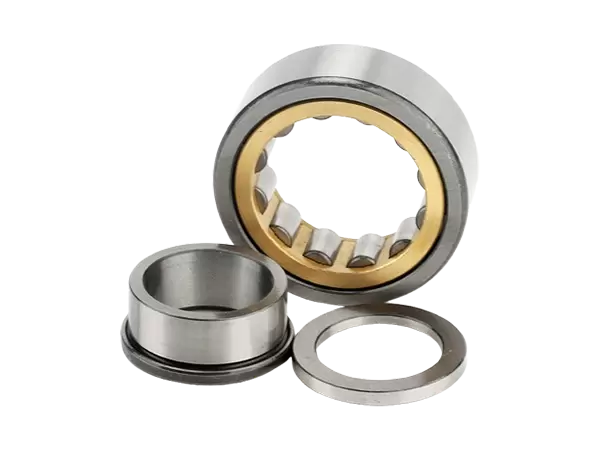
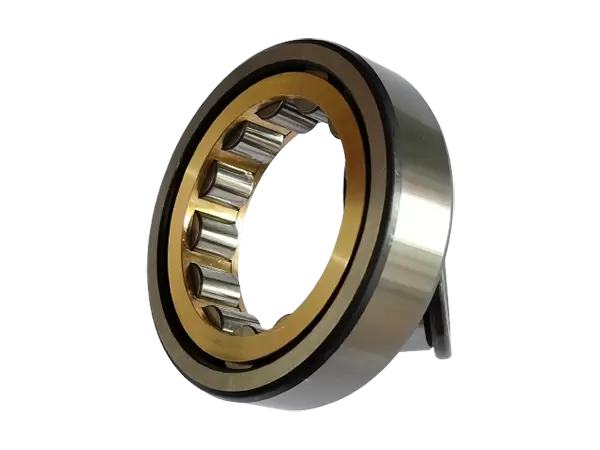
The rollers of a tapered roller bearing are conical, and the raceway forms a contact angle α with the bearing axis (typically 10°–30°). When a radial load is applied, this contact angle causes the rollers to generate a derived axial force — the load behaves like an object sliding on an inclined plane, and part of it is "decomposed" into an axial component.
This produces two key characteristics:
- Radial loads generate an axial force component: as soon as the bearing carries a radial load, the rollers push against the outer ring in the axial direction;
- Axial load capacity in one direction only: a single tapered roller bearing can restrain axial movement of the shaft in one direction only — it cannot take any force from the opposite direction.
This leads to the fundamental problem — a shaft inside a machine must be located axially in both directions.
When a motor runs, the rotor is subject to axial forces in both directions; meshing gears push and pull axially; when a vehicle turns, the wheel-end forces change direction constantly. With only one tapered roller bearing installed, the shaft will drift axially under any reverse force — at best causing loss of precision, noise, and vibration; at worst causing roller skidding, cage fracture, and scrap-level bearing failure within a very short time.
This is the first reason tapered roller bearings must be used in pairs: one bearing provides one-way location only, and bidirectional shaft location requires two bearings working together.
2. The Second Reason: The Pair "Absorbs" Each Other's Derived Axial Forces
Paired installation has another elegant function: balancing each other's derived axial forces.
As noted above, radial loads produce derived axial forces. When two bearings are arranged back-to-back or face-to-face:
- The axial component produced by bearing A under radial load is exactly taken up by bearing B;
The two bearings become each other's "axial support point." The derived axial forces close the loop internally — the shaft is not pushed out of position, and neither bearing is overloaded. Single-row deep groove ball bearings never need this consideration — their contact angle is nearly zero, so they generate almost no derived axial force.
Strictly speaking, "must be used in pairs" has two layers of meaning:
- Functionally: to achieve bidirectional axial location of the shaft;
- Mechanically: to balance the derived axial forces and prevent roller skidding and edge stress concentration.
3. Three Paired Configurations: Back-to-Back, Face-to-Face, and Tandem
Paired mounting is not simply "install two bearings." Whether the narrow faces or wide faces of the outer rings face each other determines the mechanical behavior of the entire bearing arrangement. Three standard configurations are used in the industry:
1. Back-to-back (O arrangement, suffix DB / DF)
- The wide end faces face each other; the load lines diverge outward, forming a wide effective "spread"
- High resistance to overturning moments and the best rigidity — the first choice for machine tool spindles and wheel ends
- Insensitive to shaft bending; preferred for cantilever load applications
2. Face-to-face (X arrangement, suffix DF / DB)
- The narrow end faces face each other; the load lines converge inward
- Short effective spread; tolerates mounting errors and shaft deflection — good self-alignment
- Weakness: low resistance to overturning moments; unsuitable for large cantilevers
3. Tandem (T arrangement, suffix DT)
- Both bearings are oriented in the same load direction, sharing one direction of axial load
- Used where unidirectional axial loads are extremely heavy (e.g., hoists, spiral bevel gear supports)
- Note: a tandem set must be combined with a third bearing to achieve bidirectional location — otherwise the shaft is still fixed in one direction only
How to choose? One-line rule of thumb
For rigidity, go back-to-back; for tolerance, go face-to-face; for heavy axial load, go tandem.
4. The Core Technique of Paired Mounting: Preload
Paired use also brings an important bonus — preload becomes possible.
Preloading means that at installation, by grinding the inner- or outer-ring faces, adding spacer rings, or tightening the locknut, the two bearings are made to carry a certain internal load even before any external load is applied. The benefits:
- Clearance eliminated: rolling elements stay in full contact with the raceways; radial and axial shaft movement drops to nearly zero;
- Higher rigidity: spindle system stiffness can improve by 30% or more, directly improving machining accuracy;
- Longer life: proper preload distributes load evenly across the rollers, preventing skidding damage;
- Lower noise: preloaded bearings run more smoothly — especially important for precision machine tools and EV reducers.
But preload is a double-edged sword: too little gives insufficient rigidity and shaft drift; too much causes friction, heat, and shortened life. Preload is generally kept within a few percent of the bearing's dynamic load rating; exact values should follow the manufacturer's catalog or an engineering calculation. This is why many universally matched tapered roller bearing pairs (e.g., 30202 DF) are supplied pre-ground with matched clearance — the user does not need to adjust anything.
5. Typical Applications
Wherever tapered roller bearings are used, they almost always appear in pairs:
Application | Typical configuration | Reason |
Machine tool spindles | Back-to-back (DT+DB hybrid) | High rigidity and precision |
Automotive drive hubs | Preloaded pairs | Bidirectional axial forces + shock resistance |
Gearbox shaft supports | Back-to-back | Gear axial forces change direction |
Spiral bevel gear supports | Tandem + third bearing | Extremely heavy unidirectional axial load |
Construction machinery wheel ends | Face-to-face pairs | Tolerates frame deflection |
Conversely, if you find a tapered roller bearing installed "all alone" in a machine, you can almost certainly call it a design flaw or an installation error.
6. Common Mistakes to Avoid
Mistake 1: Installing a matched pair casually. The mounting order and orientation of matched bearings matter — reversing one converts a back-to-back set into face-to-face, with completely different rigidity characteristics.
Mistake 2: Assuming more preload is better. Excessive preload is the No. 1 cause of early scuffing and overheating in tapered roller bearings; operating temperature should generally stay below 80–90°C.
Mistake 3: Substituting two small bearings for one large one. A tandem set is not simply equivalent to a larger bearing — distribution of derived axial forces and clearance matching both require dedicated design.
Mistake 4: Ignoring spacer-ring accuracy. When adjusting preload with spacers, parallelism errors of the spacer end faces convert directly into preload errors — faces must be ground flat to the micron level.
FAQ: Frequently Asked Questions About Paired Tapered Roller Bearings
Q1: Why can't tapered roller bearings be used alone, the way deep groove ball bearings can?A: Their contact-angle structure means they can carry axial load in one direction only, and radial loads generate a derived axial force. Used alone, the shaft has no bidirectional location and will drift as soon as a reverse force appears. Deep groove ball bearings have a near-zero contact angle and can take small axial loads in both directions, so a single bearing works.
Q2: Back-to-back or face-to-face — how do I choose?A: Choose back-to-back where rigidity and resistance to overturning moments matter (machine tool spindles, cantilever loads); choose face-to-face where shaft deflection is significant, mounting accuracy is limited, or tolerance to error is needed; use tandem where unidirectional axial loads are very heavy, combined with a third bearing for bidirectional location.
Q3: Do paired tapered roller bearings need preload? How much?A: Most precision applications do. Preload is generally set to eliminate all internal clearance plus a slight interference, subject to speed and temperature limits. Heavy-duty low-speed applications can take more preload; high-speed applications must keep it tight — follow the manufacturer's catalog data.
Q4: What happens if the two bearings in a pair have different clearances?A: The preload concentrates almost entirely on the bearing with the smaller clearance, overloading it — heat, and premature spalling. For critical applications, buy factory-matched pairs (DF/DB) supplied as a set.
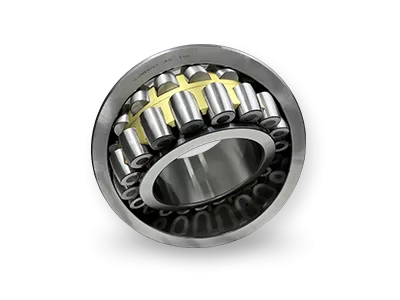
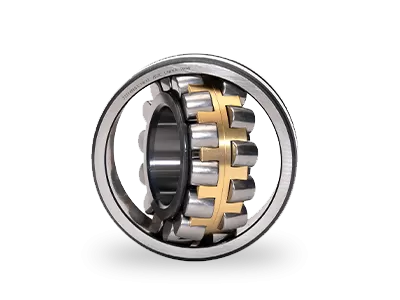
Q5: Can one spherical roller bearing plus one tapered roller bearing replace a pair of tapered roller bearings?
A: Yes — this is a common "fixed-end + floating-end" arrangement: the spherical roller bearing acts as the floating end carrying radial load, while the paired tapered roller bearings act as the fixed end providing bidirectional location. But this is a separate bearing-arrangement design, not a way of "saving one tapered roller bearing."
Conclusion
Tapered roller bearings must be used in pairs because their contact-angle mechanics leave no alternative: a single bearing provides one-way location only and generates a derived axial force. Only two bearings in the correct configuration (back-to-back / face-to-face / tandem), combined with proper preload, deliver bidirectional shaft location, high rigidity, and long service life.
Remember the rule of thumb when selecting: back-to-back for rigidity, face-to-face for tolerance, tandem for heavy axial load; and when mounting, pay attention to configuration direction, preload, and matched clearance — then your tapered roller bearings will reliably reach their full design life.